


Young people are not waiting to become the future. They are already shaping it. Our responsibility is to make sure that we are ready to listen, to engage and to give them the space and tools to make a difference.
The past two years in Serbia have shown just how ready young people are to engage, speak up and take an active role in shaping not only politics but also the future of their communities and society as a whole.
For years, I have heard questions such as: How do we get young people interested? Why are younger generations seemingly disengaged? Why do they not show more interest in what is happening around them? There has often been an assumption that young people are not interested in social issues, politics or the challenges that shape their future. However, recent experiences in Serbia have challenged this perception. Young people have demonstrated that they care, that they have opinions and that they are willing to stand up for the changes they believe are necessary.
Perhaps, then, we should start asking a different question. Instead of wondering how to make young people interested, we should consider whether we are providing them with the right opportunities, platforms and tools to express that interest and turn it into meaningful action.
One of the most important lessons from the recent experiences in Serbia is that engaging young people requires more than simply inviting them to participate. It means giving them genuine opportunities to contribute, allowing them to influence discussions and decisions and, above all, being prepared to listen. This also means accepting that their perspectives might differ from our own. Sometimes, they may question established practices, challenge traditional institutions or propose solutions that fall outside the approaches we are used to. That should not be seen as an obstacle but as an opportunity to rethink how we do things and how we can move forward.
Another important element of this transformation is the role of globalisation and digital communication. The world in which today’s young people grow up is fundamentally different from the one previous generations experienced. Social media, digital platforms and instant communication have made it possible to exchange information, connect with people across borders and mobilise around shared concerns in ways that were almost unimaginable just a few decades ago. A local issue can quickly become part of a national or even international conversation. Young people can learn from the experiences of their peers in other countries, find inspiration in movements happening thousands of kilometres away and use digital tools to bring attention to issues that might otherwise remain overlooked.
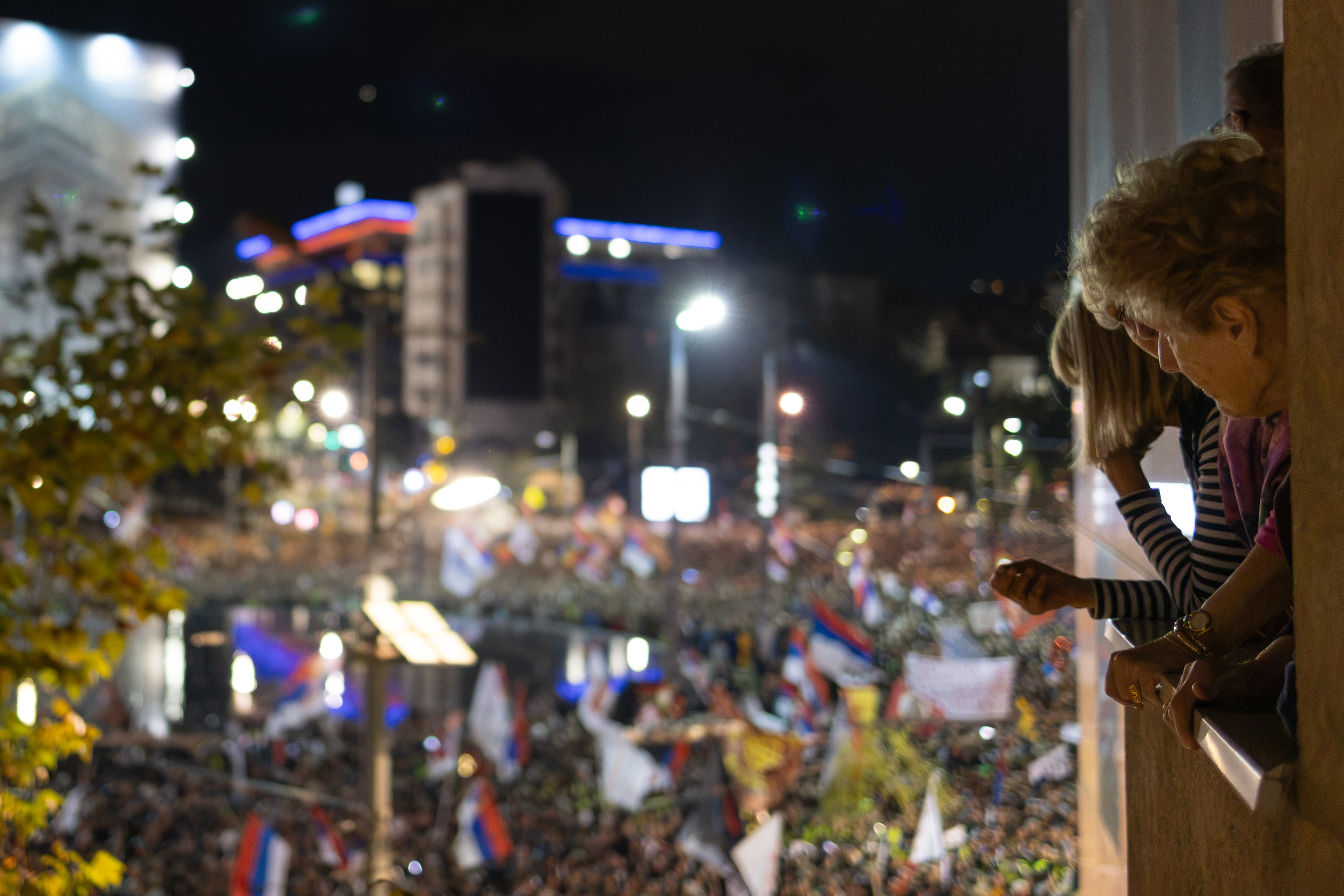
Slavija, 22.10.2026. Foto: Gavrilo Andrić / protesti.pics. https://protesti.pics/slavija
This has also changed the way young people understand participation. Traditional forms of engagement, such as formal meetings, institutional consultations and established organisational structures, still have their place. However, they are no longer the only ways to get involved, nor are they necessarily the most effective ways to reach younger generations. Today’s youth communicate differently, organise differently and often expect a more direct, accessible and transparent relationship with the institutions and organisations around them. The challenge is therefore not to choose between traditional and modern approaches but to find ways to connect them. We need to recognise the value of established structures while embracing the possibilities that digital communication and new forms of participation offer.
This is particularly relevant when discussing the green transition. Climate change, environmental protection and sustainable development are not distant policy discussions for young people. They are issues that will directly shape the world in which they will live, work and raise future generations. Young people should therefore not be viewed simply as the beneficiaries of green policies or as the generation that will eventually have to deal with the consequences of today’s decisions. They should be recognised as active participants in the process, bringing fresh perspectives, innovative ideas and a different understanding of the challenges ahead.

Slavija, 22.10.2026. Foto: Gavrilo Andrić / protesti.pics. https://protesti.pics/slavija
Digitalisation can play an important role in making this participation possible. It can help young people access knowledge, develop new skills, connect with experts and organisations and collaborate beyond geographical boundaries. At the same time, it creates opportunities to make environmental issues more understandable and relatable, especially by connecting global challenges with local experiences. However, technology alone is not enough. Digital tools are only as effective as the opportunities they create for people to participate, learn and make their voices heard.
This is where initiatives such as GREENOVATE – Engaging Youth in a Digital Green Future 2.0 become particularly important. They are an opportunity to bridge the gap between generations, traditional institutions and modern forms of communication. More importantly, they remind us that youth engagement should not be treated as a box to tick or a requirement to fulfil in a project. It should be an ongoing process in which young people have a real role in shaping conversations, developing solutions and influencing the future.
The experience in Serbia has reinforced my belief that young people do not necessarily need to be convinced to care. More often, they need to be trusted, supported and given the space to act. They need opportunities to turn their concerns into ideas and their ideas into action. And those of us working with young people need to be equally willing to learn from them, adapt our approaches and sometimes reconsider what we thought we already knew.
Slavija, 22.10.2026. Foto: Gavrilo Andrić / protesti.pics. https://protesti.pics/slavija
Source: greenovate.online